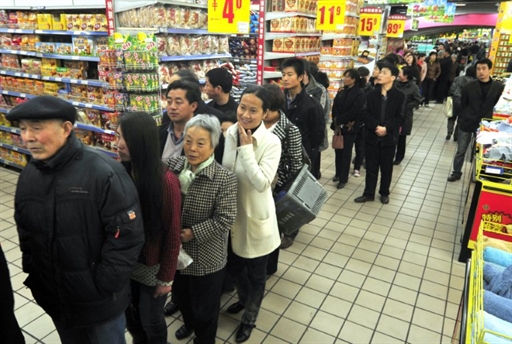
The research and insights firm's Retail and Shopper Trends Report, which covers 13 markets in the region, found that grocery prices are a pain point for consumers, ranking among their top five concerns.
Nevertheless, annual packaged grocery sales in Asia-Pacific increased 13 per cent in the past year, while volume sales grew 6 per cent.
“Although Asia-Pacific economies have been relatively insulated from the wider global economic situation, shoppers across the region are looking to economise in order to reduce their grocery bill,” observed Peter Gale, Nielsen’s managing director of retailer services in the APMEA region and Greater China.
In developed countries, consumers are relying more on promotional offers, while in developing nations, shoppers focus on buying only essential items, added Gale.
There is a slow but steady shift toward modern trade stores, such as supermarkets and hypermarkets. This category has been growing at a rate of 1 per cent per annum for the past decade, as consumers opt for the wider range, better shopping environment and lower prices. As a result, modern trade store numbers increased by 11 per cent in the past year to more than 270,000, with investment in new modern trade stores strongest in Vietnam, the Philippines and Thailand.
Convenience stores too have experienced a sharp increase in popularity over the past year, with 10,000 new outlets bringing the total to 81,000 outlets. The fastest expansion in this category was in South Korea.
“Growth of convenience and smaller store formats has shown no signs of slowing down and looks set to continue in the year ahead,” noted Gale. “The frequent interaction these chains have with their regular shoppers provides substantial opportunities to introduce new services which help to make shoppers’ lives even more convenient.”
Despite the cost-conscious nature of Asian grocery shopping, private label brands remain relatively undeveloped in the region and contribute less than 8 per cent of sales in modern trade outlets. Growth of private label brands was highest in Taiwan, Korea and Indonesia, with sales increasing by more than 20 per cent.
“Sales of private label products are beginning to gain traction in basic grocery categories such as paper products, plastic wraps, water and staples like rice and cooking products, where low price is more important to shoppers,” states Gale. “Private label growth in Asia is hindered by low levels of consumer trust in categories where there is strong brand loyalty, and retailers need to invest in improving product quality and packaging, as well as marketing.”
The techie Asian consumer is also surprisingly slow to embrace online sales of grocery products, with less than 10 per cent of urban shoppers in most Asian markets (with the exception of South Korea), visiting retailers' websites regularly.
Of those who do visit these websites, online purchasing is low on the list of desired activities, with obtaining information, viewing promotional leaflets and checking store locations being the primary motivators for visiting grocery websites.
“Markets where online retailing has gained traction, such as South Korea, provide valuable insight into the likely direction other Asia-Pacific nations will take in the coming years as retailers invest in online infrastructure and develop models for profitable delivery of products,” observes Gale. “Retailers’ online presence will become increasingly important as a means of driving product sales as well as engaging and communicating with shoppers.”