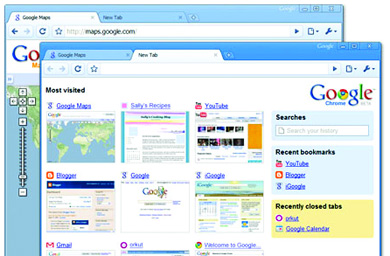
The launch of Google Chrome captured headlines around the world, as the search titan turned its attention to internet browsers.
Browsers - even before email, search and online portals - are consumers’ first port of call when browsing the web, though, until now, the market has largely been left to Microsoft. Google Chrome’s debut in 100 countries - including 14 in Asia-Pacific - threatens to shift the balance of power between the existing browsers and alter the sort of services browsers can offer.
Browsers - even before email, search and online portals - are consumers’ first port of call when browsing the web, though, until now, the market has largely been left to Microsoft. Google Chrome’s debut in 100 countries - including 14 in Asia-Pacific - threatens to shift the balance of power between the existing browsers and alter the sort of services browsers can offer.
The question for marketers and media owners is what this means for browsing habits, and what the impact will be on the other front in the battle between Google and Microsoft: search.
1 Since Microsoft trounced Netscape in the browser wars of the 1990s, its Internet Explorer software, installed on every Microsoft-based PC, has dominated the market. The main competition has come from Mozilla’s Firefox, a downloadable application that has been built on word-of-mouth among the tech-savvy community. According to research firm Net Applications, Internet Explorer holds 73 per cent of the browser market, outpacing second-place Firefox on 19 per cent and Apple’s Safari with just six per cent.
2 Google argues that Chrome is different to other browsers because, just like much of Google’s other platforms, it has a simplified design that packs multiple functions into its interface. Chrome includes a single search and address bar; a smarter launch page that remembers favoured sites and the option to go ‘incognito’ where information on visited pages isn’t embedded into Chrome’s memory (bloggers have already dubbed this service ‘porn mode’). Chrome also supports some in-house created applications that users can access even when offline. Google promises more, but is now focusing on creating a sustainable version for Macs.
3 Google executives want to weaken Microsoft’s hold on the market. One of the key issues for Google is that Internet Explorer has a built-in MSN search bar. Although Google dominates the global search market, its fear is that this could be eroded by the built-in functions on Internet Explorer. This could be a danger in Asia as new web users come online.
4 Chrome also puts Google at odds with ally Mozilla. Just a few days before Chrome launched, Google renewed its contract with Mozilla that ensures Google Search is on Firefox’s home page and that Google is its default search bar. Google may be hedging its bets. Mozilla and Chrome have to be downloaded and whichever one users choose, Google is the search option.
5 Google Chrome could also change the way portals operate. According to Claus Mortensen, regional principal of IDC Emerging Technologies Research, as browsers begin to offer more, portals such as Yahoo, Sina and Sohu, will have to create more applications to continue differentiating themselves. “Portals will need to be on their toes. They’ll need to be flexible and constantly innovative in terms of what applications they allow,” he says adding that portals may even create shortcuts on desktop prompts.
“There is a battle between what is incorporated on the desktop, what is incorporated in the browser and what is purely web-based. A good example is RSS feeds. You can now put RSS feeds directly on the desktop, in most new browsers and on web pages - including portals. Effectively, it gives the end user a better choice of how he wants access to all this information.”
6 The browser may additionally alter the nature of search marketing. DGM group head of search James Hawkins says Chrome could affect search marketing in two ways: clients may scramble to improve their placement on Google’s search pages and spend more money incorporating searchable terms to improve their chances of being seen, or niche vertical engines will gain popularity as clients move away from the fray in order to reach target audiences more effectively. “Search marketers and advertisers are going to where the people are committing their searches,” says Hawkins. “They’ll go to where the volume is, and that’s a big pitch with any online advertiser.”
Media owners
- Google Chrome is part of the continued consolidation of online media services. Soon both Google and Microsoft will offer search, portal services and email all embedded within their own browsers. The idea is to offer a web user everything they need as they go online.
- A browser cannot replace content. Specialist media that users have a reason to visit should not be affected.
- However, non-specialist media such as Yahoo-style general portals will have to work even harder to ensure users have a compelling reason to visit them. Chinese-language portals such as Sina and Sohu will continue to have local relevance as their point of difference.
- While many current web users are unlikely to change their habits, new users may choose services such as email and search based on the browser they use.
Marketers
- The key implication for marketers regards search. Chrome is a way for Google to protect its lead in the search space. In markets where Google leads, marketers should expect Google to remain the primary search partner.
- The housing of Google’s search facility within a browser could in the long term lead to new opportuinities based on search and demographic targeting. This will, however, take some time to refine.
Got a view?
Email feedback@media.com.hk