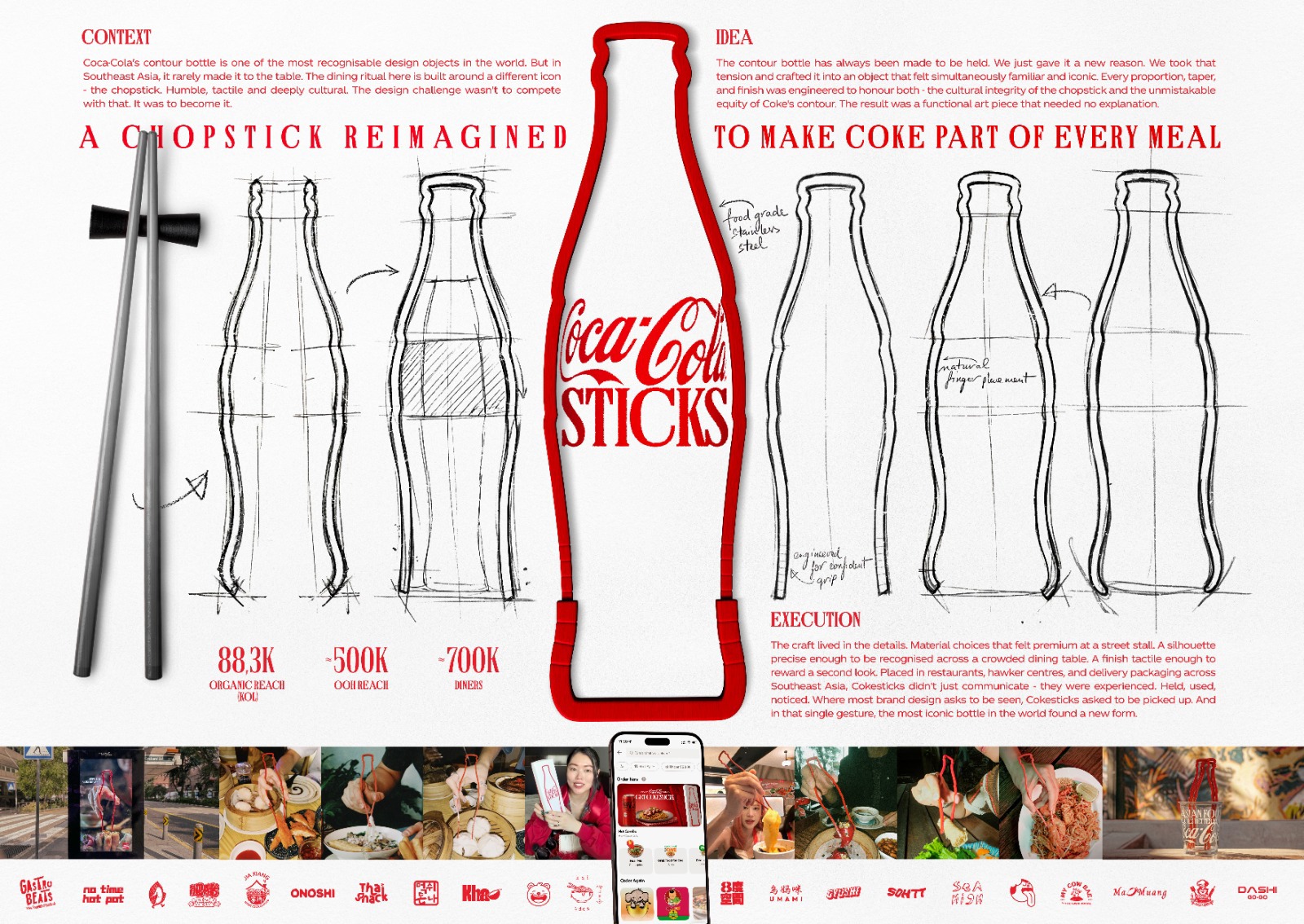
Coca-Cola has launched a campaign to close a long-standing gap in the brand's relationship with Southeast Asian dining culture, where the popular carbonated drink isn't always the first choice for meals.
Created by Ogilvy Ho Chi Minh City, the brand created CokeSticks, food-grade stainless steel chopsticks shaped after the brand's iconic contour bottle in its signature red colour. The utensils were distributed through more than 40 street food stalls, restaurants, and food delivery apps across the region.
Designed to support a comfortable grip, Coca-Cola chose steel over less durable materials like plastic so that the utensil can be kept and reused rather than discarded after a meal.
The brand's history in Southeast Asia dates back to 1912, when the Philippines became the first market outside the Americas to bottle Coca-Cola. Across APAC, Coca-Cola now spans 37 markets with an industry retail value of around US$520 billion, holding some 70% of the region's carbonated soft drinks market.
The campaign reached 88,300 diners through organic reach, in addition to 500,000 consumers via OOH.
"With Western food, Coke is the default choice," said Reed Collins, CCO, Ogilvy APAC. "A small, playful format that turned every meal into a Coke moment, making people think of Coke before they had even ordered."
Campaign's take: Coca-Cola's strongest work embeds the brand into cultural moments that feel instinctive and familiar to consumers. Its recent Year of the Horse campaign used heritage craft to make Coke part of the celebration. Similarly, CokeSticks attempts to merge design equity with rituals unique to everyday life in Asia. And while many Asians already know how to use chopsticks, the campaign keeps the brand top of mind.