The biggest agency merger in over a decade was signed in New York on Wednesday, paving the way to create the world’s largest advertising agency group, which is set to command combined annual revenues of up to US$25 billion, according to leadership.
As the merger reaches completion, Omnicom emerges as the dominant player, but what do recent activities from both Omnicom and IPG reveal about future growth potential? To asses this, key metrics such as revenue growth, profit trends, new business wins, billings, pitch conversion, and year-on-year win/loss shifts offer valuable insights, especially when viewed through the lens of the critical APAC market.
Revenue growth and profit trends
Omnicom managed a solid showing in Q3 of 2025, delivering revenues of $4 billion and posting an organic growth rate of 2.6%. For the first half of 2025, Omnicom's APAC organic revenue grew by 6.5% in the second quarter, building on a strong performance in the first quarter for a combined H1 2025 organic revenue of 6.3%. This was a key driver of the company's overall organic growth in the first half of the year. It shows stable momentum in an industry navigating economic headwinds and shifting client demands. Omnicom’s ability to grow organically speaks to the strength of its agency roster and diversity of clients.
However, IPG is in a different phase of its journey. Its Q3 revenues stood at $2.14 billion, reflecting a 4.8% decline compared to the same quarter in the previous year. This pullback is partly a deliberate consequence of cost-cutting measures, including the reduction of approximately 800 employees in September alone and the release of roughly 135,000 square feet of office space. Profitability saw a positive trend despite shrinking revenues, suggesting tighter operational control and a focus on efficiency as IPG prepares for its next chapter. In the APAC region, a vital growth hotspot, IPG recorded a sharper 6% decline in organic revenue for Q3. For the first half of 2025 (H1 2025), IPG reported an APAC organic revenue decline of 11.5%. The region experienced a sharper 13.6% organic decline in the second quarter alone.
New business wins and billings
In terms of net new-business billings for November 2025, IPG holds second place globally with $1.33 billion in wins, showcasing ongoing strength, according to Campaign Red data from COMvergence. Key recent victories such as Initiative’s win of HelloFresh and Mediabrands’ addition of the $20 million Yieldstreet investment platform illustrate a mix of traditional clients and new economy brands.
Omnicom, meanwhile, is gaining ground fast. Jumping to third place with $1.03 billion in net billings, up from $391 million just the previous month, Omnicom’s surge has been propelled by agency wins from Hearts & Science and PHD. Particularly noteworthy is PHD’s securing of Volkswagen Group’s media account earlier this year in China, valued at $335.1 million, highlighting Omnicom’s growing foothold in the critical Asian markets.
Asia-Pacific comparison
Omnicom appears to be making especially aggressive inroads in Asia-Pacific, where growth remains a priority for global holding companies. PHD climbed from 17th to first place in the November APAC media new-business league with $371.3 million in net billings year-to-date, nudging ahead of Publicis’ Spark Foundry. The agency’s recent wins include Marico in India, worth $41.7 million, and Betr Entertainment in Australia, at $13 million.
OMD, another key Omnicom-owned agency, skyrocketed from 16th to third place in the APAC November rankings with billings of $102.4 million. Wins such as Muthoot Finance (India), Legoland Resorts (China), Skechers (China), Under Armour (China), and Kimberly-Clark (China) have played critical roles in driving this surge. Overall, Omnicom consolidated its position as the second-largest APAC holding company for new-business billings with $528.3 million, closing the gap on Publicis.
By comparison, Mediahub remains IPG’s only agency to feature in the November APAC media rankings, taking seventh place with an estimated $42 million in billings. The performance was driven by its Hasbro APAC win, along with Auto & General and Radiant Health in Australia. However, this marked a slight decline from October, when the agency ranked fifth.
Elsewhere, IPG’s Initiative surged from 84th to ninth place in October following a string of major wins across Bayer (APAC), Uni-President (China) and Netflix (Australia). By November, however, the agency had once again fallen outside the top 20.
At group level, IPG ranked fourth in the October APAC holding company table with US$51 million in billings, supported by the same key wins, Bayer and Uni-President via Initiative, and King Living via UM. By November, however, IPG slipped out of the top five. Omnicom has remained steady in the top five throughout the quarter, gradually closing the gap with Publicis.
IPG, facing growth challenges in Asia, has focused more on streamlining operations for stronger future stability. The contrast in strategies between the two holding companies is becoming increasingly clear with Omnicom pushing for growth and expansion while IPG leans towards consolidation.
Preparing for the merger
Behind the scenes, IPG has been actively reshaping its operations, shedding nearly 3,200 roles globally this year and vacating significant office space to slash overheads ahead of the merger. The divestment of FutureBrand from McCann Worldgroup and the exit of senior executives, including the global chief, signal organisational changes as IPG steers through uncertain times.
Omnicom’s approach has been less dramatic, aiming for a workforce reduction below 3% worldwide. However, it did cut 3,000 roles from its global workforce in 2024. In October, it confirmed that it was carrying out a “rigorous” review of all of its agency brands, in which it is expected to scale back its DDB network.
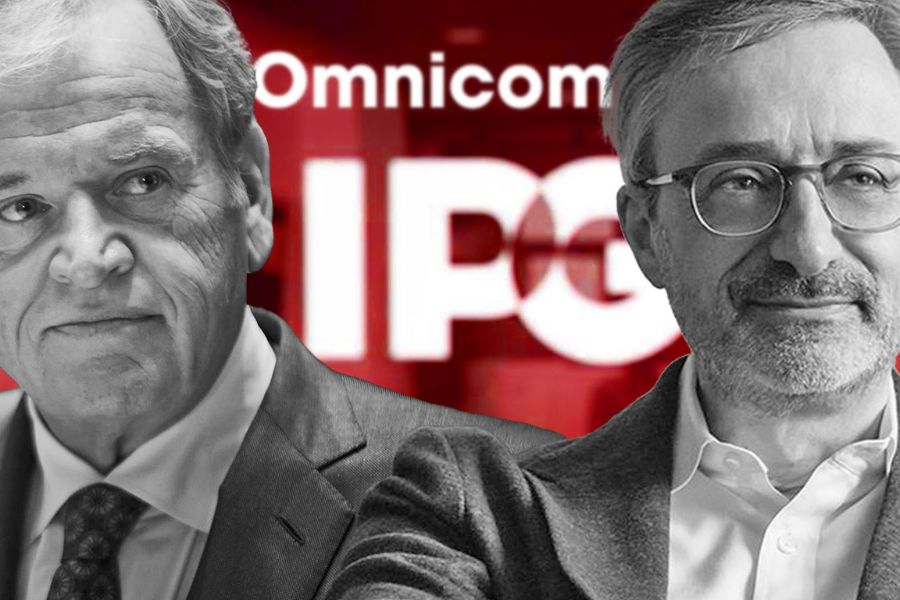
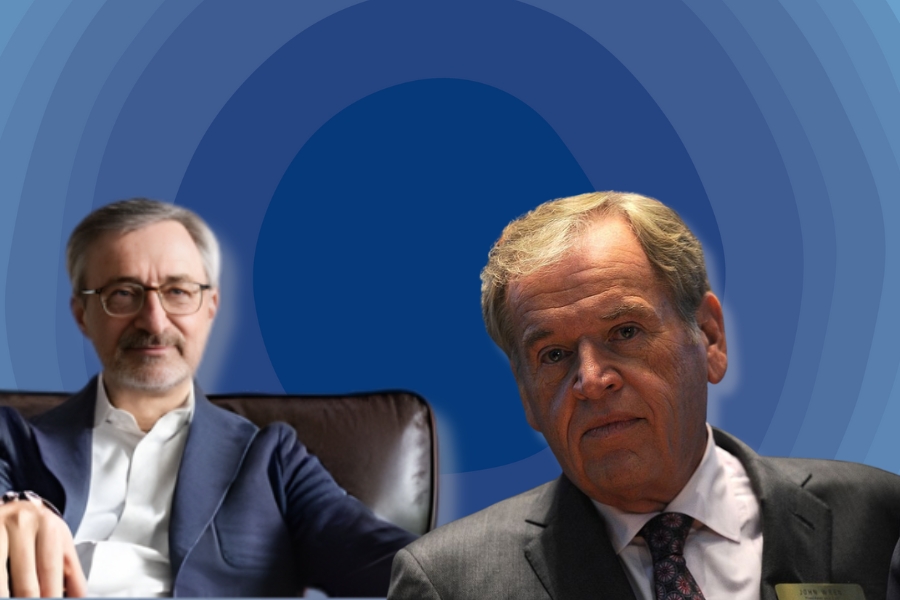
Both leaders, Omnicom chairman and CEO John Wren and IPG CEO Philippe Krakowsky, have spoken openly about targeting $750 million in annual cost synergies through enhanced organisational efficiency, reduced service costs, and cuts to administrative expenses. While cost efficiencies will be important, Omnicom’s growth trends position it well to lead the combined business commercially.
Technology and innovation as growth drivers
Omnicom’s recent wins also highlight its edge in innovation and technology leadership. For example, PHD became OpenAI’s first-ever global media agency of record, an important milestone showcasing its commitment to integrating artificial intelligence and emerging tech in marketing strategies. Additionally, OMD secured the global media account for Merlin Entertainments, including high-profile brands like Legoland and Madame Tussauds, further strengthening Omnicom’s appeal to global clients seeking innovative and integrated marketing solutions.
While IPG continues to advance in data-driven marketing and commerce technologies, Omnicom’s ability to capitalise on tech trends and secure marquee accounts in digital-first categories gives it a competitive advantage.
Which holding company will drive future growth?
"As this is effectively a take over/acquisition, rather than a merger, it is clear the dominant player is Omnicom and the game plan we are seeing and hearing being played out will be Omnicom led," says marketing consultant Darren Woolley. "But as for which network brands will survive and which will disappear, that could be a patchwork quilt based on market and regional strengths and dominant client preferences. But as the agency brands are effectively the entry door to the offering, they will be less important except for those clients that still believe they are buying the brand and not a solution."
Omnicom’s recent revenue stability and new business expansion, especially in APAC, alongside high-profile tech wins, suggest robust contributions to post-merger momentum. IPG’s efficiency drives and client diversity offer complementary scale and resilience amid transitions. How will these blend to exceed the sum of their parts?
"Omnicom is financially stronger than IPG due to its solid balance sheet, higher revenue growth, and lower leverage," says Woolley. "While IPG showed strong profit margins and a good cash position ahead of the acquisition, its revenue was declining, while Omnicom was demonstrating steady revenue growth. But they will be hoping that the combination of the two will be more than the sum of the parts. But since it has taken almost a year from announcement to being finalised, there is a lot of time and ground they need to make up."
Outlook
As Omnicom and IPG join forces to form a $25 billion advertising behemoth, the hope is that the combined strengths will accelerate transformation in a fast-evolving marketing landscape. The merger will test both organisations’ ability to integrate diverse cultures, client services and technology capabilities. Recent activities from both signal complementary paths to growth, with synergies in media, AI and APAC poised to redefine client outcomes.
The merger could well redefine global advertising, as recent performances from Omnicom and IPG lay the groundwork for a powerhouse blending momentum, efficiency and innovation in the industry’s most watched deal of 2025.
"It feels strange calling this a merger, because Omnicom is literally swallowing IPG whole. It feels from the outside as more like a takeover than a merger," says Woolley. "But this will not be the end of the consolidation we will see happening in the industry in the forseeable future. This is because agency networks and their holding companies need to transform from the suppliers of advertising services to marketing communications and customer management platforms that offer major advertisers a neat and bundled solution to their growth challenges."