And so it begins.
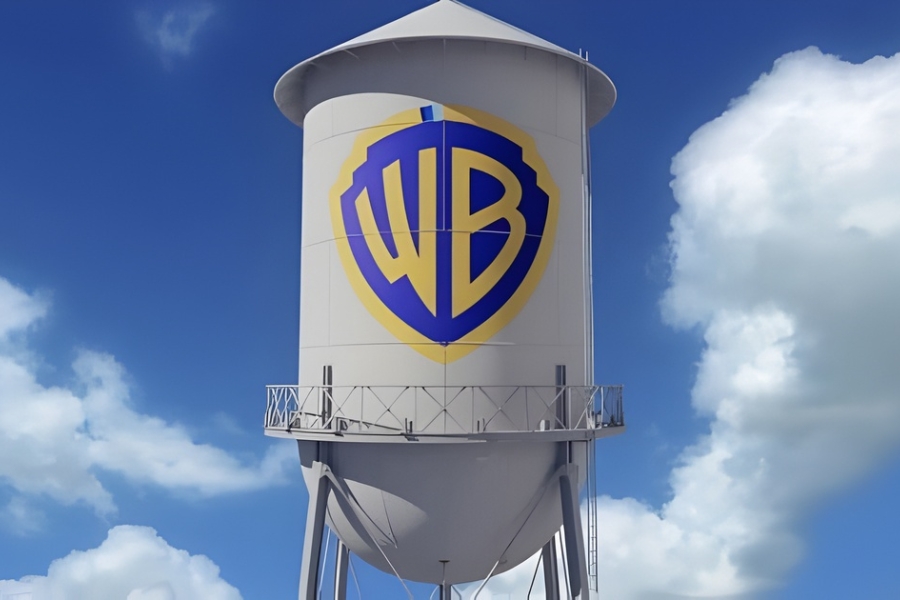
Warner Bros. Discovery (WBD) has put itself up for sale, with its board of directors announcing this week that it "has initiated a review of strategic alternatives to maximise shareholder value", the usual corporate parlance for initiating such a process. The move is not unexpected, but it marks the start of consolidation within the media industry, at a time when both cyclical and structural (hello AI!) challenges are circling the sector. So who are the likely bidders for the assets, and what are their chances?
Paramount has the 'Trump' card—literally
Warner Bros. Discovery, the parent of CNN, HBO Max, DC Comics, Cartoon Network, and a storied list of other brands.
In pole position, the most likely bidder remains Paramount. It has both a clear desire and a clear rationale to own the assets. The Ellison family, which owns Paramount, have the wealth. Mega-billionaire Larry Ellison briefly overtook Elon Musk to become the world’s richest person recently after a jump in the Oracle share price. The elder Ellison has expressed support for President Trump in the past and has close links with the White House, which will help in overcoming regulatory issues.
From a WBD standpoint, it also makes sense to dispose of the assets as one than trying to sell piecemeal, as the former is quicker and less complicated. WBD does not want to be left in a situation where it sells the "good" assets (streaming, etc) and the "bad" assets (the legacy networks) are stranded.
Comcast: Once bitten, twice shy
Theoretically, Comcast ticks many of the same boxes. However, I do not see a bid for the entire group and maybe not for either part (although they may bid just to get inside the data room). The company's experience of buying Sky will weigh heavily on both management and investors when considering another mega-deal. It would also risk a bidding war with a family that has deeper pockets. And Comcast does not have the same close political links with the White House.
Netflix could be tempted
While it has previously ruled out legacy media assets, the company has changed its mind before—as John Maynard Keynes famously said, “When the facts change, I change my mind.” However, while the company would probably very much like the content library and the Games unit, the rest of WBD comes with potential issues, including the integration of the streaming assets. Netflix also has its own battles to fight with scaling its advertising and games businesses, and may not have the bandwidth or appetite for a messy takeover.
Amazon might be the dark horse here
Amazon may be a more interesting candidate: the content assets streaming part would certainly be of interest, as well as WBD's experience in selling TV advertising, a market which Amazon clearly sees as a key strategic goal in its expansion plans. Would it want the network's business? On paper, no, but it may think it makes sense from a longer-term strategic perspective if it sees TV advertising as playing a much bigger role in the group. Much depends on whether Amazon thinks it can add something new to the table.
The rich, cautious player is probably out
Apple’s name inevitably crops up in every big-ticket M&A conversation. It certainly has the cash. It has also just bought the Formula One streaming rights in the US and invested in films. However, Apple's foray into streaming seems tentative and with no clear strategy (for now) in mind. Integration is obviously a major issue, especially given differences in culture. Plus, Tim Cook is very conservative in his strategic views and use of cash. I just do not see Apple bidding (famous last words).
There's logic in YouTube bidding
YouTube has not been mentioned as a bidder, but there are clear rationales. Owning WBD would deepen its content control, strengthen its 'YouTube is TV' narrative, and expand its ad revenue base. But the optics could be messy, given that YouTube has said it is redefining TV and is pushing on content creators, buying WBD (part or all) may muddy that message. Plus, a bid would likely face significant regulatory hurdles, especially given that parent Alphabet is facing several attempts to break up its assets in the US courts.
Sony and the Saudis
Finally, what about overseas suitors? Sony could make a play, but I suspect they will not bid. The Studion and the Library assets would be attractive but not the streaming assets. Remember, Sony famously sat out the streaming wars and acquiring WBD’s networks would invite regulatory and geopolitical complications, especially within the US-Japan trade sphere. Sony probably won’t want that drama.
Then there is the potential Middle Eastern involvement.
The Saudi-backed takeover of Electronic Arts, together with the region’s investments in sports rights and general desire to grow its presence in Media and Entertainment, suggests that there could be interest from the region. Do not rule it out: WBD is a big prize, although there are potential political considerations involved. But in the current environment, a bid is more than possible.
As usual, this is not investment advice.
Ian Whittaker is the founder and managing director of Liberty Sky Advisors. He writes a regular column for Campaign about the advertising landscape from a financial standpoint. This opinion piece is not investment advice.