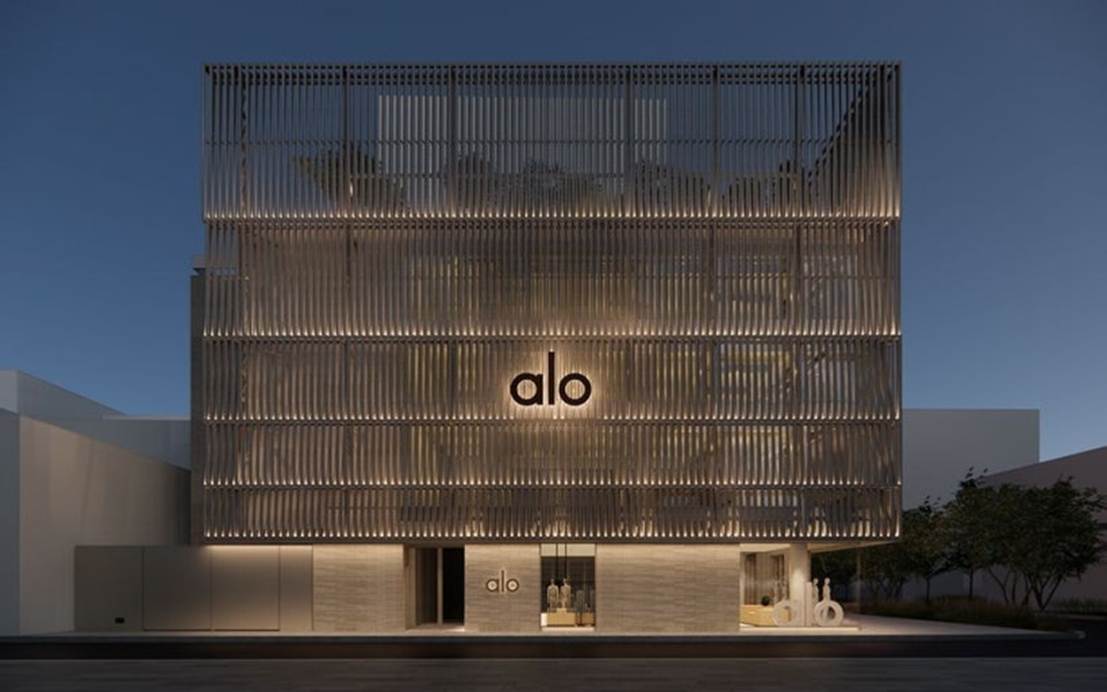
The U.S. premium activewear brand Alo Yoga has emerged as one of the buzziest in global athleisure, yet its Asian expansion is still underway. The brand is set to open two flagship stores in the heart of Beijing and Shanghai in Q2 2026.
Local media in Hong Kong reported social media speculation that Alo Yoga is preparing to open its first Hong Kong store at the former Fortnum & Mason site. The British luxury grocer closed its K11 MUSEA location at Tsim Sha Tsui in late January. Supporting the rumours, Alo has recently advertised multiple job openings on recruitment platforms, listing Hong Kong as the workplace
In China, however, Alo’s recognition has so far been shaped more by culture and counterfeits than by commerce, raising questions about whether demand is being cultivated or squandered before the brand finally arrives.
Its decision to launch a flagship in Seoul last July, ahead of China, reflects a calculated strategy. Korea offers speed, trend influence and operational clarity, but it cannot replicate China’s scale, platforms or competitive intensity.
Meanwhile, Lululemon has already surged ahead with more than 200 stores, a deep educator network and a mature digital CRM, positioning itself as an operating system rather than just a product brand. Alo now faces the challenge of carving out meaningful differentiation as a second mover.
With a growing footprint across Indonesia, Malaysia, Singapore, the Philippines, Thailand and South Korea, the question is whether Alo can build real muscle in Asia or risk being defined by markets it has yet to fully enter.
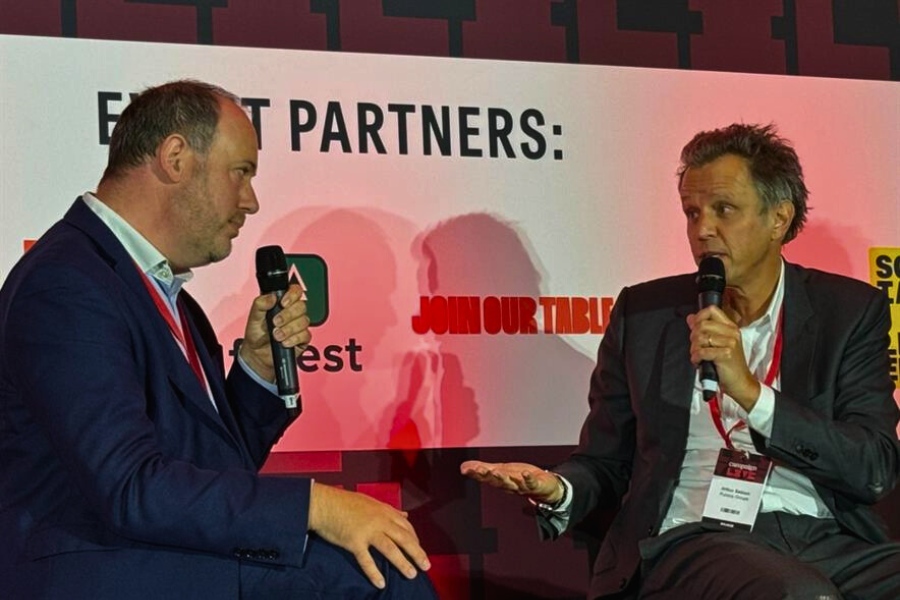
Campaign sat down with regional marketing experts to analyse the challenges and opportunities of Alo’s next chapter.
 L-R:
Celin Chen, Jan Harling, and Virginia Ngai
L-R:
Celin Chen, Jan Harling, and Virginia Ngai
Did China make Alo famous before the brand was ready?
Celin Chen, deputy general manager, EternityX China: Yes—but that fame is fragile. China didn’t make Alo famous too early; China made Alo familiar before Alo was ready to be precise about who it is.
In China, Alo became visible through culture before it arrived through commerce. Its early awareness was driven by celebrities, yoga influencers, and social aesthetics rather than official brand storytelling, pricing authority, or retail presence. That kind of bottom-up familiarity is rare and powerful, but it also cuts both ways.
The spread of counterfeits is not simply an IP issue; it signals unmet demand, while simultaneously risking a grey-market perception before Alo has defined its own values, price architecture, and authority. The real danger is not early fame, but unmanaged fame. Once Chinese consumers feel they already “know” a brand, it becomes significantly harder to reset its positioning later.
Jan Harling, CEO, Virtus Asia: In many ways, yes - but not in a way that is necessarily damaging.
Alo’s early visibility in China has indeed come through culture, not commerce. Counterfeits, social visibility, and organic adoption by fashion- and wellness-adjacent audiences signal latent demand, not failed control. This mirrors a familiar pattern with discovery brands: awareness precedes authorisation.
Crucially, Alo is not built as an ad-led, distribution-heavy brand. Its power comes from being noticed without announcing itself. The absence of traditional advertising is not an oversight; it is a feature and likely will work in favour of attracting more early adopters. Alo feels premium precisely because it is not shouting. I have seen it everywhere globally - Dubai, Shanghai, Los Angeles, Hong Kong, Bangkok, yet never “seen” it advertised. That scarcity of overt intent is what makes it aspirational and can demand the premium.
The risk, of course, is that grey-market visibility fixes Alo as accessible without permission, eroding future pricing power and especially the narrative control. But Alo’s brand strength lies less in logo ownership and more in lifestyle signalling: wellness, time, self-investment, and mindful affluence. These are difficult to counterfeit meaningfully.
So the more accurate framing is not that China made Alo famous too early, but that China validated Alo’s relevance before formal entry. The open question is whether Alo chooses to formalise that demand - or continue to let “IYKYK” do the work until conditions are right.
Virginia Ngai, associate partner, Prophet Hong Kong: Short answer: Yes, but in a risky way.
In markets like China, "brand readiness" is not about store count or supply chain logistics. It is about the ability to shape meaning at platform speed. If a brand cannot do this, the market will do it for them, often in irreversible ways.
Alo has generated significant buzz in China through platforms like RedNote, resonating with fashion-forward consumers keen on the "LA wellness" aesthetic. However, this cultural visibility lacks alignment with commercial control. The absence of official storefronts has led to a proliferation of counterfeit and quasi-official Alo stores across major e-commerce platforms.
Instead of fostering constructive "bottom-up demand," this situation undermines Alo’s brand equity, creating associations with inconsistent quality and lower price points. Counterfeits are not just capturing demand; they are redefining Alo’s perceived value in the market.
As a relatively new name in China, Alo has missed a crucial opportunity to articulate its unique identity within an already crowded athleisure landscape. Unlike established competitors, Alo has not anchored itself around distinctive value propositions, such as innovative fabric technology, functional performance, differentiated design philosophy, or a compelling purpose-led experience. In a market dominated by global leaders and agile domestic players, fame without a solid brand identity is a liability, not an advantage.
Why Korea before China, and what does that reveal?
Chen: Korea is a smart testing ground—but it cannot substitute China. If Alo uses Korea to validate its Asia playbook, it’s strategic. If it uses Korea to delay China, the cost of late entry will compound quickly.
From a China perspective, Korea offers speed, cultural influence, and a relatively clean operating environment. It works well for fast trend validation, brand image calibration, and leveraging celebrity and fashion ecosystems.
China, however, plays by entirely different rules. Its platform ecosystems—Tmall, Douyin, Xiaohongshu—create a unique commercial and cultural logic. The athleisure category is hyper-competitive, and localisation expectations across content, community building, and CRM are far higher. Success in Korea does not meaningfully reduce the complexity of winning in China.
Harling: I see Korea is not a proxy for China, but as its brand laboratory. Seoul offers what China does not at this stage:
- Speed of cultural feedback
- High trend sensitivity
- A cleaner operating environment
- Disproportionate influence on Asia-wide aesthetics, especially among younger, affluent consumers
For a brand like Alo - positioned at the intersection of fashion, wellness, and everyday luxury - Korea is an ideal place to refine tone, not scale. It allows Alo to pressure-test whether its minimalist, premium, wellness-led positioning translates in Asia without the operational and reputational risks of China.
More importantly, Korea gives Alo a safe place to tune its identity without breaking it. Right now, there’s limited upside in leaning too hard on “American roots” in Asia - especially when the cultural codes that signal modern wellness and premium restraint increasingly flow out of Seoul, not California. And many Chinese consumers still look to Korea for inspiration in taste, aesthetics, and lifestyle cues.
If Alo is being truly strategic, it can use Korea to let the brand feel Korea-adjacent within its global framework - quietly, through styling, storytelling, community formats, and the overall “way of being,” rather than through overt localisation or loud cultural borrowing. Subtle, culturally fluent, and still unmistakably Alo.
This suggests Alo is not delaying China out of fear, but out of discipline. It is validating how to show up in Asia before deciding how big to be.
Ngai: Korea is a smart testing ground, but it is not a substitute for China.
Using Seoul before entering China makes strategic sense, given Korea's soft power effect. As Asia’s fashion capital, Seoul attracts millions of Chinese travellers each year, making it a strategic locale for Alo. Establishing Korea as its Asia hub reflects a deliberate brand-building strategy that leverages Seoul's prestige as an amplifier and testing ground for experiential retail.
Alo's partnerships with K-pop ambassadors, particularly BLACKPINK’s Jisoo, not only boost visibility within Korea but also create a halo effect that resonates with consumers beyond Korea, including audiences in the US and other markets. This ambassador strategy drives efficiency, especially with a large number of Chinese consumers visiting Korea, enhancing brand recognition before entering China.
While Alo has aggressively opened five stores in Korea in five months, signals for a China flagship are already on the horizon, particularly with an imminent entry into Hong Kong. However, Korea is not a proxy for China. It does not replicate China’s scale, platform complexity, competitive intensity, or consumer expectations. Today, China is not just a growth market but an innovation engine, where international brands are expected to design products, experiences, and operating models specifically for local consumers. While Korea can validate brand desirability, it cannot replace the deep localisation and operational commitment required to win in China.
The critical question remains: Will Alo approach China as a natural extension of its strategy in Korea or as a fundamentally different market that requires a tailored go-to-market strategy built from the ground up?
Can Alo still stand out with Lululemon already entrenched?
Chen: Only if Alo competes on culture and identity, not on scale or systems. In China, Lululemon is no longer just a brand—it’s an operating system.
With more than 200 stores, deep educator networks, and mature CRM and community operations, Lululemon has built an ecosystem that would be unrealistic for Alo to challenge directly in the near term. Trying to out-system Lululemon would be both inefficient and ineffective.
Alo’s opportunity lies in meaning, not mechanics. Alo doesn’t need to out-system Lululemon in China; it needs to mean something different before it tries to scale. Its differentiation is fashion-forward, lifestyle-led, and rooted in studio culture, aesthetics, and social expression. In the China context, that means owning aspirational content and cultural symbols first—before expanding retail density or community infrastructure.
China made Alo visible before it had control, Korea may refine the brand but won’t simplify China, and winning as a second mover will depend on identity and culture—not scale.
Harling: Yes - because they are solving different emotional jobs, even if they sell adjacent products.
Lululemon in China is no longer just a brand; it is an operating system. It owns performance, participation, and routine. It is functional, social, and increasingly mass – maybe too mass already. That ubiquity is both its strength and its ceiling. For Lululemon, that premium price point is going to be harder to defend when quality missteps are in the public conversation -and even more so when they are compounded by regulatory fines. In that environment, the brand’s core value equation comes under pressure, and the gap between price and perceived quality can start to feel exposed.
Alo, by contrast, is not trying to win on performance or penetration. It is winning on permissionless aspiration.
Alo is for “those who can afford to be mindful.” Not financially alone - but emotionally and temporally. In a world where status is increasingly about being time-poor, true luxury is the ability to slow down. Time for self-care. Time for wellness. Time for reflection. Time for experiences over possessions.
Alo’s brand language assumes this mindset. Travel, affluence, and self-investment are taken for granted. The product is a signal, not a solution. You don’t wear Alo to perform better; you wear it to say something about what you value.
That makes Alo structurally capable of entering China as a second mover - if it resists the temptation to compete on Lululemon’s terms. No mass store rollout. No overt performance claims. No aggressive localization.
In short, Lululemon owns the gym. Alo owns the inner life.
Ngai: Yes, but only if it competes as a platform, not just a style.
In China’s athleisure landscape, the competition is no longer merely brand against brand, but platforms against moments. lululemon has established a robust, repeatable platform for customer engagement and conversion, transitioning from a product-led mindset to a comprehensive ecosystem that encompasses O&O to build its community.
Alo's risk lies in being perceived as a moment that is highly visible but structurally thin. lululemon's recent leadership transition presents both a challenge and an opportunity. As they redefine their strategic vision under new leadership, Alo must be prepared not only to compete but to innovate.
Standing out will require Alo to build a holistic strategy that integrates product, storytelling, community, and commerce into a cohesive system. Rather than viewing China as a simple extension of its global success or a trend to capitalize on, Alo must see it as a core innovation market.
This means rebuilding its purpose, performance, and community from the ground up, at China speed and with a distinctly Chinese intent. With Alo’s entry into Hong Kong imminent, strategically aligning its approach in both markets can unlock significant opportunities.
Final Thought: As brands navigate these complex dynamics, the emphasis should be on building authentic connections and relevance with consumers, understanding the local culture, and fully leveraging partnerships. In this rapidly evolving landscape, brands that adapt thoughtfully will not just survive but thrive.
| This post is filed under... Brand Health Check: We assess and (if necessary) solicit suggested remedies |