Empty Coke glass inspires illustrators for campaign via McDonald's
For its 2015 drinking-glass giveaway through McDonald's, Coca-Cola worked with Arcade for a campaign to run in 22 markets in Asia Pacific, The Middle East and Africa. Arcade worked with Kult in Singapore, which invited six artists to create illustrations inspired by their country during a specific year that McDonald's released a previous Coke glass. The artists worked with a template containing the outline of the glass and were asked to integrate various branded elements while also retaining their own style. Please see the image captions for additional details (provided by Kult).
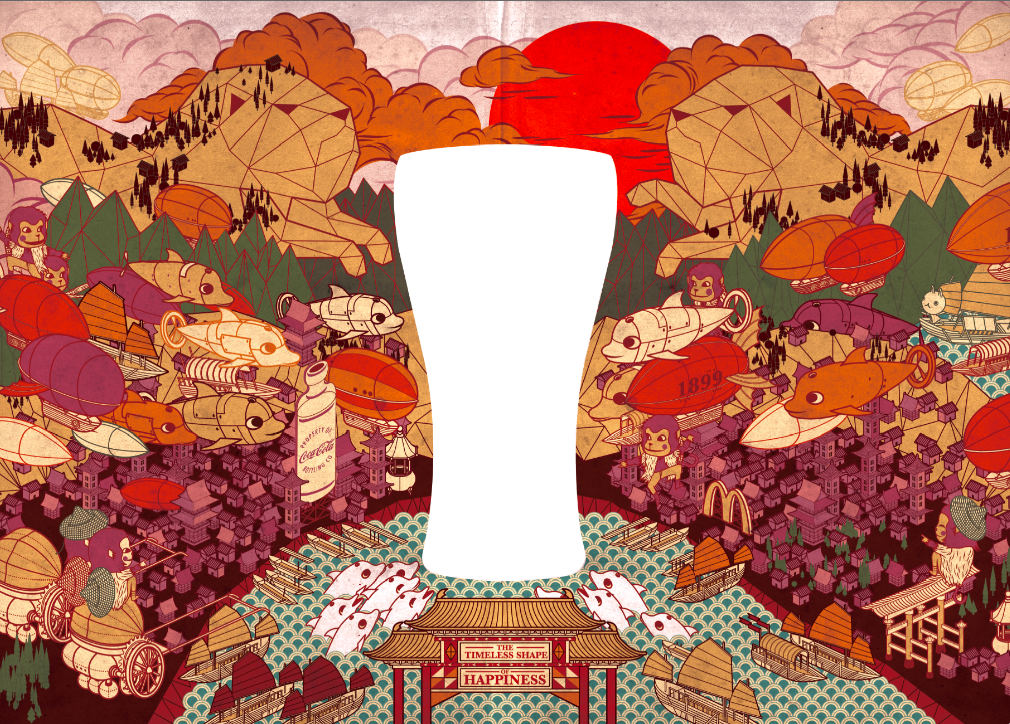
By Stephan Chan to represent 1899 Hong Kong. The artist was inspired by iconic landmarks and natives of Hong Kong such as Lion's Rock mountain, monkeys and white dolphins. He added steampunk elements like flying fishing boats and dolphin-shaped ships to represent trade and growth, as well as the coming together of people and cultures. He wanted to achieve the feeling of an old photograph or old Chinese painting.
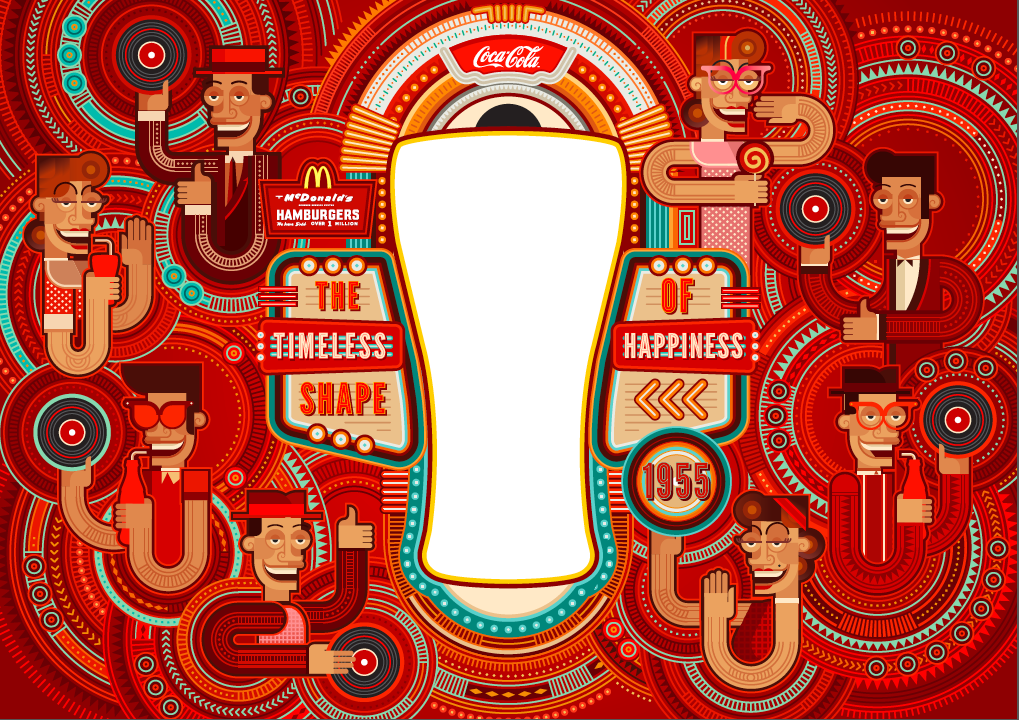
By Ipung Kurniawan to represent 1955 Indonesia. Inspired by the jukebox, an icon of 1955. The illustrated characters are inspired by 1950s fashion and the patterns by traditional shadow puppets.
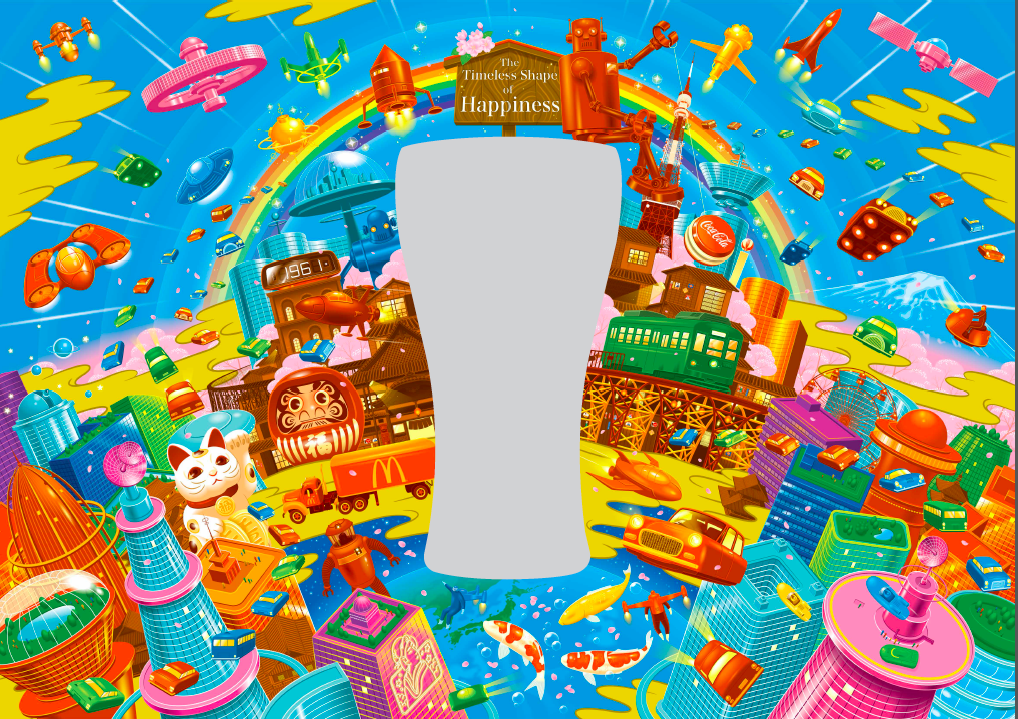
By Kouzou Sakai to represent 1960 Japan. The 1960s was a time filled with the power to dream. In the 21st-century world depicted, various high-rise buildings stand, cars fly in the sky, humans go into space, and robots are developed.
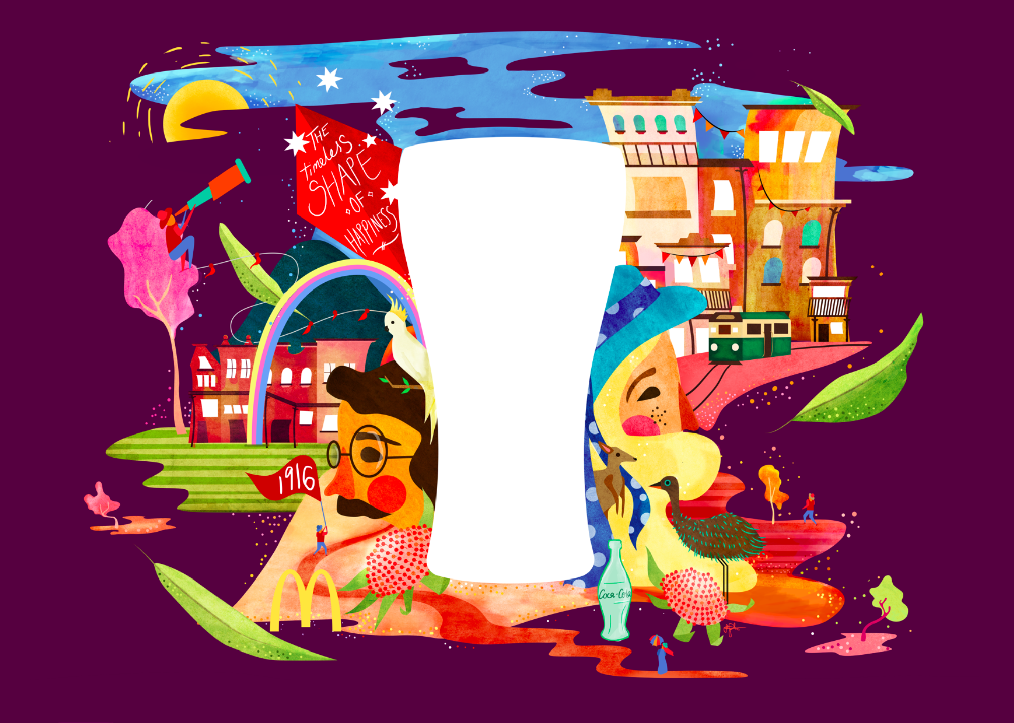
By Irene Feleo, 1916 Australia. The artwork celebrates Australia's sunkissed landscapes and rustic wooden towns. She also shows the natural flora and animals that are native to Australia.
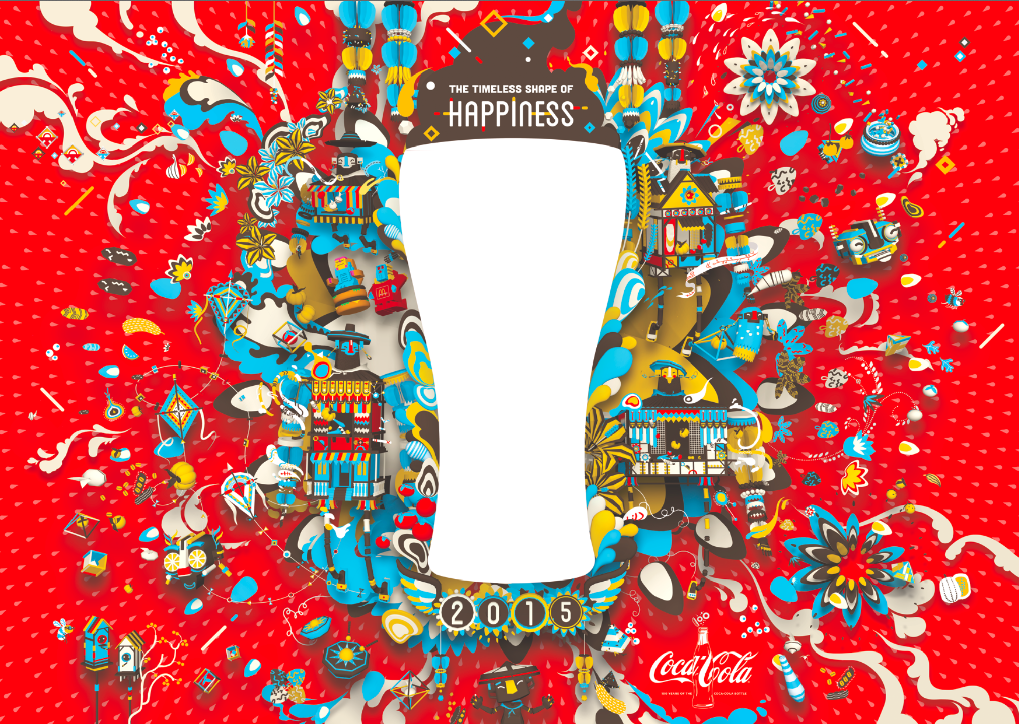
By Ivan Despi, 2015 Philippines. Inspired by the colorful Pahiyas Festival of the Quezon Province. The artist focused on the houses, imagining a moment in the festival when the houses suddenly come alive and join the celebration. He also added a number of items identifiable with Philippines culture, such as saranggolas (kite), palayok (clay pot), kulintang (musical instrument) & pamaypay (fan made from abaniko).
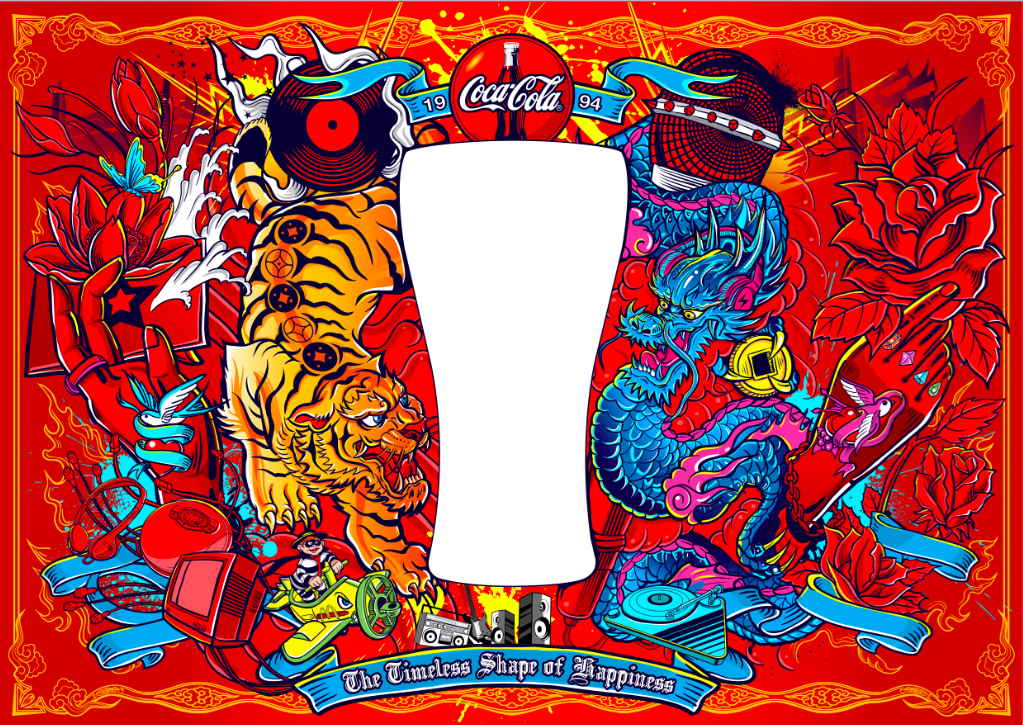
Sean Wei, 1994 Taiwan. Showing a golden era of local Taiwanese pop culture, the piece represents a mixture of American hip-hop, indie rock and electronic music. Memories of the first ever democratic election, national health insurance policy, the boom of cable TV, and internet fever inspired the artist.
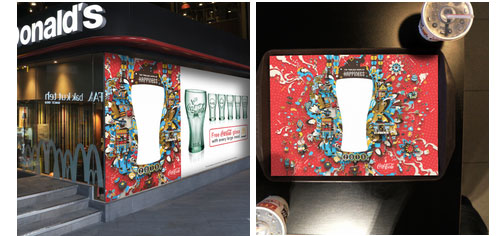
The artwork appeared in print posters, POS materials and TVCs.