| Inside job: This story is part of Campaign Asia-Pacific’s ongoing series exploring how brands across APAC are bringing marketing functions in-house and how this changes their creative process, talent development, and business outcomes compared to working with agencies. |
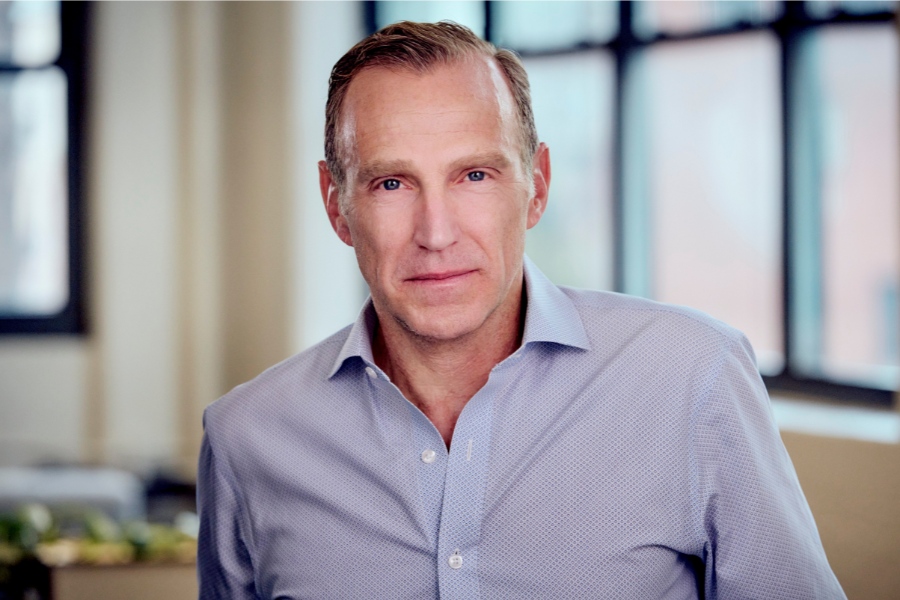
Her career has taken her to some of the highest-profile consumer brands in Hong Kong, but the campaign Agnes Lung is asked about the most is one of her most recent—and certainly most unexpected. In 2023, charged with celebrating the 15th anniversary of the Bao Dim Sin Seng dim sum brand, the executive director and group chief marketing and digital officer of the Uni-China Group reached back to one of the city’s first, and most enduring, digital memes.
In 2004, Italian international footballer Massimo Ambrosini featured on a live broadcast of a birthday party for the ATV channel, alongside his AC Milan teammates. It was the midfielder’s own birthday, and he was asked to lead a rendition of ‘Happy Birthday’. When not a single other guest joined in, the footage of his lonely chorus quickly became a local shorthand for a disappointing party and spawned countless online tributes.

It shows that in such a hugely diversified business—which spans everything from wet markets to a fast-growing self-storage chain—you sometimes have to take inspiration in unexpected places. As Lung puts it, “I’m not doing marketing. I’m a business partner. Every brand has a different audience, and my passion is learning everything I can about each one. The challenge is how you strategise and use all the different channels [in each case].”
Breaking down siloes
The fact that Uni-China is heavily reliant on an in-house team might at first seem incongruous in a business requiring so many different skillsets: event marketing, brand and direct-to-consumer through to the more recent addition of a performance marketing capability. But there is a logic here for a firm that is ‘conservative’, at least in its financial outlook.
Look beneath the surface and the 25-year-old group is built on a series of modular playbooks and strategies which govern how it develops and integrates new business units, all with a strong seam of data running through the middle. “With the right brand strategy,” says Lung, “David can fight Goliath, if you spend smartly.”
The above June 2025 campaign featuring actress Charmaine Sheh, was produced by Uni-China Group's in-house creative team.
Finding commonalities across the business (and, crucially, avoiding silos) is particularly useful in helping people have fulfilling, and productive, careers, she adds. It means brand and retail marketing teams will work together on promotions and lend each other resources during busy periods, increasing individuals’ exposure across the business and improving internal mobility. “If someone wants to be in my role one day, she needs a big span of different experiences. Marketing isn’t just brand management or PR. It’s research, strategy, how you integrate a CRM. You only learn that through trial and error, otherwise it’s all theoretical. You can go to tons of seminars and hear what the speakers said about it, but you have no practicality or skills.”
The current Uni-China structure is an ideal breeding ground for such opportunities. Having started life as a single fresh pork counter in the Tseung Kwan O neighbourhood, it now owns multiple mid-size restaurant and fast-food chains and three supermarket brands. But just as significantly, it is a fresh food supplier for multiple retailers, is responsible for almost a third of Hong Kong’s pork supply chain. In addition, it operates wet markets and malls, offers security services, and handles local marketing and distribution for a diverse range of F&B brands.
Lung admits her first few weeks in the role in 2023 were spent just trying to understand the complexity of the business, before beginning a restructure which created what she calls an ‘inter-connected web’ of 85-plus marketers in which skills are loosely clustered together with relevant areas of operation, as well as unifying the business under the single Uni-China master brand. The resulting structure, informed by her experiences at Starbucks and McDonald’s as well as local restaurant group Tam Jai International and beauty retailer Sa Sa, promotes a T-shaped talent model where marketers can specialise while retaining exposure to other parts of the business.
The key to delivering on this promise is a culture that relentlessly promotes both individual development and, crucially, collaborative learning. This happens in all sorts of ways, but Lung gives the example of Lemon, a food-oriented social channel the business owns. As well as being a success in its own right, with a growing reputation for its client-focused work, the Lemon team also act as an internal sounding board by sitting down with internal marketers and keeping them up to speed on trends and key learnings gleaned from social media.
Specific stretch assignments also help. Team members will be seconded into very different areas of the business: at first, says Lung, they are reticent about such opportunities but when they view it in terms of their development and the need for a rounded skillset, they understand how it will aid them. “Some of the people [we hired] from agencies have really treasured that opportunity,” says Lung. “Most marketers are flexible and agile in nature, and if they’re agile enough they can pick up something new.”
Cultivating agility as strategy
That sort of agility is helping Uni-China utilise AI, too. The technology aids the development of specific creative and expertise is shared via internal boot camps, but the more intriguing initiative is ARMS (it stands for AI Retail Management System), an in-house tool which uses CCTV to monitor wet markets and help standardise customer interactions, check inventory levels and even make suggestions about product placement.
The overall effect, says Lung, is to keep marketers focused on marketing without having to worry about peripheral issues, as well as futureproofing careers: “Fifteen years ago, I could see a lot of people who were getting phased out of the industry because they couldn’t catch the flow of digital marketing and weren’t open to change.”
Distributed by Uni-China Group, Nongfu Spring's recent campaign featured celebrities Moses Chan and Janis Chan.
The next frontier for Uni-China may stretch its dedicated to agility even further. The business has been working to promote mainland brand Classy Kiss yoghurt across Hong Kong since 2024 and recently partnered with the giant Nongfu Spring beverage group to do the same for its hugely popular water and tea products.
Lung says it’s a natural evolution. “Most well-known mainland brands, if they want to go overseas, they need to go through Hong Kong to fix everything before they’re ready to go offshore.”
Nongfu Spring’s launch in the city was a glitzy, multi-channel affair which included persuading the brand to ditch the traditional Chinese reticence for working with celebrity ambassadors. So far, it has been a resounding success.
“The most difficult thing with Chinese brands is to help them understand the market is different in terms of living standards, habits, advertising landscape,” says Lung. “But I’m impressed with the open-mindedness of mainland brands. They are ready to go global.” And if they need an extra helping hand, Massimo Ambrosini might be persuaded to step in.